

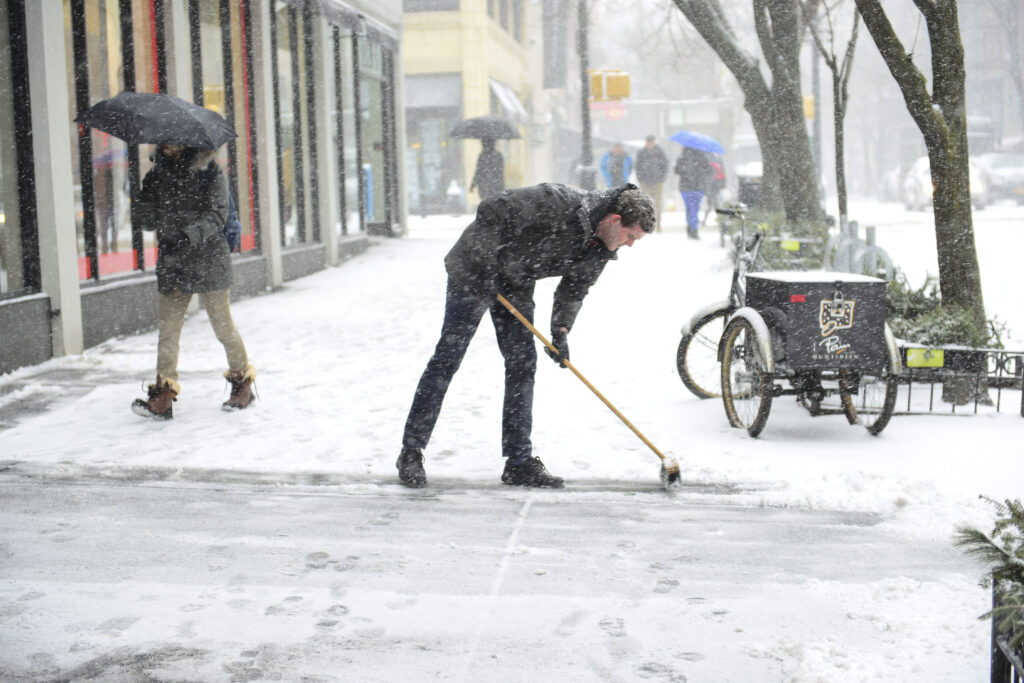
Brooklyn, New York. – If you’ve lived in New York long enough, you know winter has a habit of going quiet… then reminding everyone who’s in charge. That’s exactly what just happened, this January storm dropped the heaviest snowfall the city has seen in five years, with Central Park logging over 11 inches in a single day. After several relatively mild winters, it left a lot of New Yorkers asking the same question: is this a one-off, or a sign of what’s coming?
The answer starts with the polar vortex.
What the Polar Vortex Really Is
The polar vortex isn’t a storm and it isn’t new. It’s a large pool of cold air that circles the Arctic every winter high in the atmosphere. When it’s strong, it keeps that cold air locked in place. When it weakens or stretches, the jet stream becomes wavier. Those southward dips allow Arctic air to spill into the U.S., setting the stage for serious winter weather in places like the Northeast.
Why Big Snowstorms Still Happen
Cold air alone doesn’t make a blockbuster storm. You need three things to line up:
- Arctic cold pushed south by a stretched polar vortex
- A wavy jet stream that slows and intensifies storms
- Plenty of moisture from warmer oceans and air masses
That last part is the paradox. A warmer atmosphere holds more moisture. So when that moisture meets deep cold, the result can be heavy, disruptive snow. That’s exactly what happened this month. Cold air surged south while moisture from the Atlantic and Gulf fed the system, turning it into the snowiest New York storm since 2021.
Where Climate Change Fits In
Winters are warming overall. Snow seasons are shortening, and more winter precipitation is falling as rain instead of snow. That part is well established. What’s still being debated is whether Arctic warming makes polar vortex disruptions more likely. Some studies suggest uneven Arctic warming may amplify atmospheric waves that destabilize the vortex, while others find the link less clear.
What is clear is this: when cold air does reach the Northeast, today’s atmosphere is better at producing intense precipitation than it was decades ago.
Big snow years may be less frequent, but when conditions align, winter can still hit hard.
In New York, it always finds a way.